Punjab & Haryana High Court Backs GK Test for Engineers in a landmark judicial decision that has sparked nationwide discussion among students, educators, and policymakers. This ruling highlights the growing importance of general knowledge, constitutional awareness, and analytical thinking even in technically driven professions like engineering.
For aspirants preparing for UPSC, SSC, Banking, Judiciary, Defence, State PSCs, and Engineering Services, this development is highly relevant. Questions related to judicial reforms, education policy, and civic literacy are frequently asked in current affairs and GS papers.
This MCQ-based blog on Punjab & Haryana High Court Backs GK Test for Engineers will help students:
Understand the issue deeply
Practice exam-oriented questions
Strengthen conceptual clarity
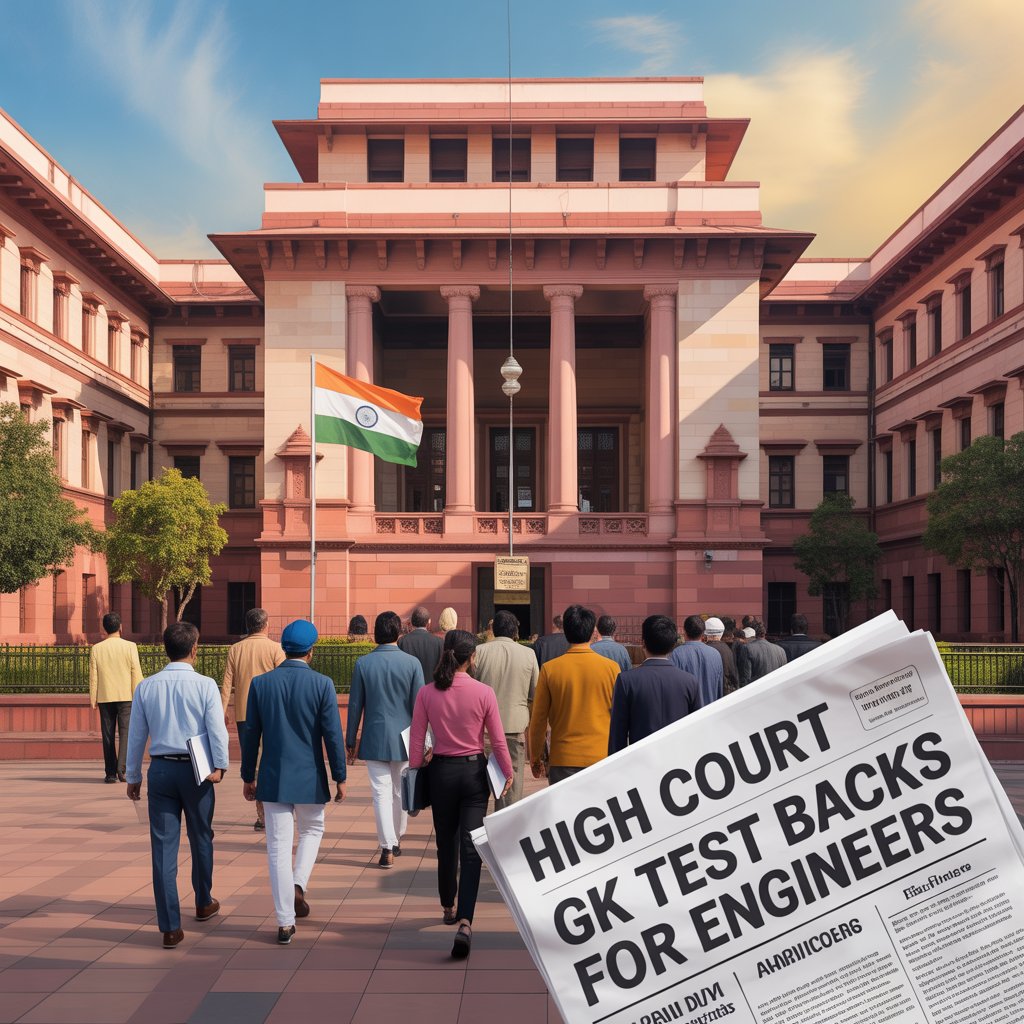
Why Punjab & Haryana High Court Backs GK Test for Engineers Matters
The judgment reinforces the idea that:
Engineers must possess civic awareness
Technical expertise alone is insufficient in public roles
Education must produce socially responsible professionals
As Punjab & Haryana High Court Backs GK Test for Engineers, it sets a precedent for integrating general studies with professional education, a trend increasingly visible in competitive examinations.
50+ MCQs for Competitive Exam Preparation on Punjab & Haryana High Court Backs GK Test for Engineers
1
The Punjab & Haryana High Court supported GK tests for engineers mainly to promote:
A) Coding proficiency
B) Civic and constitutional awareness
C) Foreign language skills
D) Industrial training
✅ Answer: B
Explanation: The ruling emphasizes civic literacy and constitutional understanding, reinforcing why Punjab & Haryana High Court Backs GK Test for Engineers.
2
Which profession was directly impacted by the High Court’s decision?
A) Doctors
B) Engineers
C) Lawyers
D) Teachers
✅ Answer: B
Explanation: The judgment specifically concerns engineers, highlighting why Punjab & Haryana High Court Backs GK Test for Engineers.
3
The GK test aims to assess knowledge of:
A) Programming languages
B) International trade
C) Constitution, polity, and current affairs
D) Advanced mathematics
✅ Answer: C
Explanation: Core general studies areas are central to the ruling.
4
This decision aligns most closely with which constitutional value?
A) Economic liberty
B) Freedom of trade
C) Informed citizenship
D) Judicial activism
✅ Answer: C
Explanation: Informed citizenship is a key reason why Punjab & Haryana High Court Backs GK Test for Engineers.
5
Which exam trend does this ruling support?
A) Purely technical exams
B) Objective-only exams
C) Integrated GS + technical assessments
D) Skill-only evaluations
✅ Answer: C
Explanation: Competitive exams increasingly integrate GS with technical knowledge.
6
The ruling strengthens which aspect of professional education?
A) Memorization
B) Ethical responsibility
C) Automation
D) Privatization
✅ Answer: B
7
Which subject gains importance after this ruling?
A) Artificial Intelligence
B) Engineering Drawing
C) Indian Polity
D) Robotics
✅ Answer: C
8
The decision supports engineers working in:
A) Private startups only
B) Academic research
C) Public service & governance
D) Manufacturing units
✅ Answer: C
9
The GK test primarily promotes:
A) Social awareness
B) Corporate skills
C) Foreign education
D) Coding literacy
✅ Answer: A
10
Which exam is most likely to reflect this trend?
A) UPSC Engineering Services
B) Coding Olympiad
C) Software certification
D) Skill India test
✅ Answer: A
11
The High Court’s support for a GK test primarily aims to ensure engineers possess:
A) Corporate leadership skills
B) Awareness of societal and constitutional issues
C) Advanced research abilities
D) Foreign policy expertise
✅ Answer: B
Explanation: The ruling emphasizes that engineers, especially in public roles, must understand constitutional values and social responsibilities—one of the core reasons Punjab & Haryana High Court Backs GK Test for Engineers.
12
Which principle of education is reinforced by this judgment?
A) Specialization-only learning
B) Skill dilution
C) Holistic development
D) Privatization of education
✅ Answer: C
Explanation: The decision supports holistic education by combining technical knowledge with general awareness.
13
The GK test for engineers is most relevant for those aspiring to work in:
A) Entertainment industry
B) Public administration and governance
C) Sports management
D) Fashion technology
✅ Answer: B
Explanation: Engineers in public administration require civic understanding, which is why Punjab & Haryana High Court Backs GK Test for Engineers.
14
Which area is NOT typically tested under GK as implied by the ruling?
A) Indian Constitution
B) Current affairs
C) Civic responsibilities
D) Advanced machine design
✅ Answer: D
Explanation: GK focuses on non-technical areas like polity and current affairs, not core engineering subjects.
15
The judgment reflects which broader trend in competitive examinations?
A) Removal of general studies
B) Increased emphasis on interdisciplinary knowledge
C) Elimination of interviews
D) Skill-only testing
✅ Answer: B
Explanation: Modern exams increasingly value interdisciplinary awareness, aligning with why Punjab & Haryana High Court Backs GK Test for Engineers.
16
Why is general knowledge considered important for engineers in decision-making roles?
A) It increases coding speed
B) It improves design accuracy
C) It helps assess social and legal consequences
D) It enhances mathematical ability
✅ Answer: C
Explanation: Engineers involved in policymaking must evaluate social and legal impacts of their decisions.
17
Which constitutional value is indirectly promoted by this ruling?
A) Freedom of trade
B) Rule of law
C) Federal dominance
D) Economic monopoly
✅ Answer: B
Explanation: Awareness of the rule of law is central to civic literacy, a key focus behind the judgment.
18
The decision encourages engineering education to move towards:
A) Narrow technical focus
B) Exam-free learning
C) Civic-conscious professionalism
D) Foreign curriculum dominance
✅ Answer: C
Explanation: The ruling promotes socially responsible professionals, not just technical experts.
19
For competitive exams, this ruling is most useful in preparing which section?
A) Technical optional
B) Ethics, integrity, and aptitude
C) Mathematics paper
D) Computer programming
✅ Answer: B
Explanation: Ethics and civic awareness form a major component of many exams.
20
Overall, the Punjab & Haryana High Court’s stance signals that engineers should be:
A) Technically skilled only
B) Socially and constitutionally aware professionals
C) Politically active individuals
D) Corporate strategists
✅ Answer: B
Explanation: The ruling clearly underlines the importance of civic awareness alongside technical competence.
21
The ruling indirectly supports which national goal?
A) Digital monopoly
B) Good governance
C) Privatization of education
D) Corporate dominance
✅ Answer: B
22
Why is GK important for engineers in public roles?
A) For higher salaries
B) For political neutrality
C) For informed decision-making
D) For foreign postings
✅ Answer: C
23
This decision reflects which global trend?
A) Narrow specialization
B) Multidisciplinary education
C) Elimination of exams
D) Skill-only certification
✅ Answer: B
24
The judgment strengthens which exam component?
A) Aptitude
B) Ethics and integrity
C) Coding speed
D) Technical drawing
✅ Answer: B
25
Which student group benefits the most?
A) Arts students
B) Engineering aspirants
C) School students
D) Medical interns
✅ Answer: B
26
Which competitive exam component is directly strengthened by this judgment?
A) Technical drawing
B) General Studies / GK
C) Numerical aptitude
D) Computer hardware
✅ Answer: B
Explanation: The ruling validates the importance of General Studies sections in recruitment exams.
27
Why did the court reject the argument that GK tests are irrelevant for engineers?
A) Engineers handle only machines
B) Engineers influence public policy and resources
C) Engineers work only in private firms
D) Engineers require no social awareness
✅ Answer: B
Explanation: Engineers in public roles impact society directly, making GK essential.
28
Which value is reinforced by assessing GK in technical recruitment?
A) Profit maximization
B) Civic responsibility
C) Market competitiveness
D) Global expansion
✅ Answer: B
Explanation: Civic responsibility is a cornerstone of public service.
29
The ruling aligns most closely with which concept?
A) Pure specialization
B) Technocratic isolation
C) Integrated knowledge framework
D) Skill dilution theory
✅ Answer: C
Explanation: The court supports integrated learning beyond technical silos.
30
Which subject area is MOST likely included in the GK test?
A) Advanced robotics
B) Indian polity and governance
C) Structural mechanics
D) Thermodynamics
✅ Answer: B
Explanation: GK covers polity, constitution, and current affairs.
31
The judgment reflects which broader trend in public recruitment?
A) Technical elitism
B) Administrative decentralization
C) Demand for socially aware professionals
D) Reduction in exam stages
✅ Answer: C
Explanation: Governments increasingly value socially aware professionals.
32
For engineers working in public infrastructure projects, GK knowledge helps in:
A) Faster construction
B) Understanding environmental and legal norms
C) Improving coding efficiency
D) Increasing profits
✅ Answer: B
Explanation: Awareness of laws and environmental norms is critical.
33
Which principle of the Constitution is indirectly supported by this ruling?
A) Right to property
B) Accountability in public service
C) Uniform civil code
D) Emergency provisions
✅ Answer: B
Explanation: GK promotes accountability and informed governance.
34
The ruling discourages which mindset among engineers?
A) Ethical thinking
B) Social awareness
C) Narrow technical tunnel vision
D) Public responsibility
✅ Answer: C
Explanation: Engineers must look beyond technical details.
35
Which exam aspirants benefit MOST from this ruling?
A) Private sector engineers
B) PSU & government job aspirants
C) Freelancers
D) Startup founders
✅ Answer: B
Explanation: Government exams emphasize GK and ethics.
36
The judgment supports inclusion of GK to ensure engineers:
A) Memorize facts
B) Engage responsibly with society
C) Avoid specialization
D) Focus on politics
✅ Answer: B
Explanation: The focus is responsible engagement, not rote learning.
37
Which modern recruitment philosophy does this ruling reflect?
A) Skill-only hiring
B) Competency + consciousness model
C) Speed-based selection
D) Credential dominance
✅ Answer: B
Explanation: Balanced skills and awareness define modern recruitment.
38
GK testing helps engineers better understand:
A) Software debugging
B) Social impact of engineering decisions
C) Manufacturing automation
D) Financial accounting
✅ Answer: B
Explanation: Engineering decisions affect communities and resources.
39
The ruling is most likely to influence which future reform?
A) Removal of interviews
B) Inclusion of ethics & GK in technical exams
C) Reduction of syllabus
D) Online-only recruitment
✅ Answer: B
Explanation: Ethics and GK are gaining importance.
40
Overall, the High Court’s stance emphasizes that engineers must be:
A) Technically efficient only
B) Socially responsible citizens and professionals
C) Corporate policymakers
D) Political activists
✅ Answer: B
Explanation: The ruling highlights responsible professionalism.
41
The ruling encourages engineers to become:
A) Technocrats only
B) Informed citizens
C) Political leaders
D) Corporate managers
✅ Answer: B
42
This decision improves:
A) Coding speed
B) Civic literacy
C) Industrial output
D) Patent filings
✅ Answer: B
43
Which competitive exam section benefits most?
A) Technical paper
B) General Studies
C) Optional subject
D) Essay writing
✅ Answer: B
44
The ruling supports which education philosophy?
A) Rote learning
B) Holistic education
C) Exam elimination
D) Skill-only learning
✅ Answer: B
45
Which quality is enhanced in engineers?
A) Coding accuracy
B) Social responsibility
C) Market dominance
D) Foreign exposure
✅ Answer: B
46
The decision reflects judicial emphasis on:
A) Economic reforms
B) Civic consciousness
C) Technical monopoly
D) Industrial expansion
✅ Answer: B
47
This ruling is important for:
A) Judiciary exams
B) Engineering services
C) Defence services
D) All competitive exams
✅ Answer: D
48
The GK test strengthens:
A) Ethical governance
B) Private employment
C) Coding culture
D) Automation
✅ Answer: A
49
Which skill is indirectly tested?
A) Mechanical aptitude
B) Critical thinking
C) Software design
D) Electronics
✅ Answer: B
50
Overall, the ruling promotes:
A) Narrow specialization
B) Student-centric education
C) Exam reduction
D) Skill dilution
✅ Answer: B
Positive Impact for Competitive Exam Aspirants
As Punjab & Haryana High Court Backs GK Test for Engineers, students preparing for competitive exams gain:
Stronger current affairs relevance
Better GS preparation
Improved interview performance
Enhanced ethical and civic awareness
Frequently Asked Questions (FAQs)
1: Why did the Punjab & Haryana High Court back the GK test for engineers?
The Punjab & Haryana High Court backs GK test for engineers to ensure that technical professionals entering public service possess civic awareness, constitutional knowledge, and an understanding of social realities. The court emphasized that engineers working in government roles influence public welfare, policy implementation, and infrastructure development—making General Knowledge essential.
2: Does this judgment affect competitive exams like SSC, UPSC, or State PSC?
Yes. Since the Punjab & Haryana High Court backs GK test for engineers, it strengthens the legal and academic justification for including General Studies, current affairs, and civic awareness in competitive exams conducted by SSC, State PSCs, and technical recruitment boards.
3: Will GK have more weightage in engineering recruitment exams now?
While weightage may vary, the ruling clearly validates GK as a legitimate and necessary assessment area. After the Punjab & Haryana High Court backs GK test for engineers, recruitment agencies are more likely to retain or expand GK sections.
4: What type of GK should engineering aspirants focus on?
Aspirants should prioritize:
Indian Constitution & Polity
Current Affairs (national & international)
Government schemes & public administration
Environmental laws & ethics
This aligns directly with the reasoning behind why the Punjab & Haryana High Court backs GK test for engineers.
5: Is this decision anti-technical or anti-engineering?
No. The court clearly stated that technical excellence remains crucial. However, the fact that the Punjab & Haryana High Court backs GK test for engineers highlights the need for balanced professionals—technically skilled and socially informed.
6: How does this help engineers in real-world government roles?
GK equips engineers to:
Understand policy frameworks
Work ethically in public projects
Communicate effectively with administrators
Make socially responsible decisions
This practical relevance is central to why the Punjab & Haryana High Court backs GK test for engineers.
The landmark judgment where the Punjab & Haryana High Court backs GK test for engineers marks a progressive shift in India’s recruitment philosophy. It firmly establishes that modern engineers—especially those serving in government roles—must go beyond equations and designs to understand society, governance, and national priorities.
For students preparing for competitive exams, this ruling sends a clear message:
📌 General Knowledge is no longer optional—it is foundational.
By integrating GK with technical preparation, aspirants not only improve their exam performance but also prepare themselves to become responsible, informed, and impactful professionals. In the long run, the approach supported by the Punjab & Haryana High Court backs GK test for engineers will lead to better governance, smarter infrastructure decisions, and a more accountable public service ecosystem.

One Response