Current Affairs Related to Exams & Education Policies have become one of the most important sections for students preparing for school exams, competitive examinations, and entrance tests. Whether it is UPSC, SSC, State PCS, banking exams, or school-level assessments, questions based on recent education reforms and examination updates are frequently asked.
In recent years, Current Affairs Related to Exams & Education Policies have gained more importance because governments and education boards regularly introduce new learning systems, digital platforms, and examination reforms to improve student outcomes.
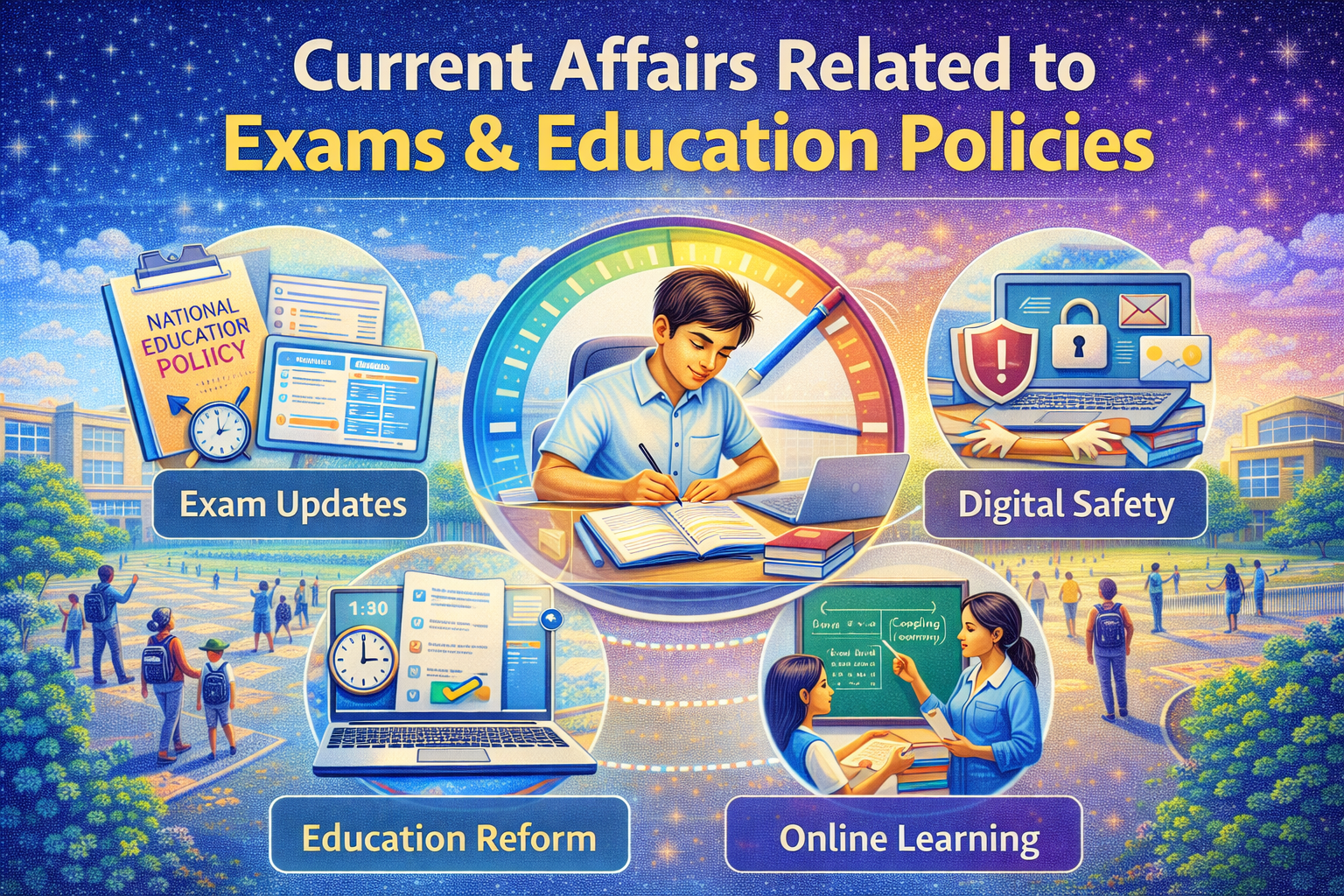
Why Students Must Follow Current Affairs Related to Exams & Education Policies
Keeping track of Current Affairs Related to Exams & Education Policies helps students:
Stay updated with exam pattern changes
Understand new education reforms
Answer MCQs confidently in competitive exams
Improve general awareness and interview readiness
Most competitive exams now include questions directly linked to Current Affairs Related to Exams & Education Policies, making this topic essential for regular preparation.
Major Themes in Current Affairs Related to Exams & Education Policies
1. National Education Policy (NEP) Updates
2. Digital Learning & Online Exams
3. Examination Reforms & Evaluation Methods
4. Student Welfare Schemes
5. Skill Development & Vocational Education
All these themes regularly appear under Current Affairs Related to Exams & Education Policies in exams.
Role of Education Policies in Competitive Exams
Questions from Current Affairs Related to Exams & Education Policies test a student’s understanding of how education systems evolve. These questions check awareness rather than rote learning, making preparation more conceptual and analytical.
30+ MCQs on Current Affairs Related to Exams & Education Policies
1
Which policy introduced multidisciplinary education in India?
A. Right to Education Act
B. National Education Policy 2020
C. Skill India Mission
D. Digital India Program
Answer: B
2
Under NEP 2020, the school structure has been changed to:
A. 10+2
B. 5+3+3+4
C. 8+4
D. 6+3+3
Answer: B
3
Which organization conducts the National Achievement Survey (NAS)?
A. CBSE
B. NCERT
C. NTA
D. AICTE
Answer: B
4
Which digital platform was launched to support online education in India?
A. DIKSHA
B. UIDAI
C. eCourts
D. BharatNet
Answer: A
5
Which exam body was formed to standardize entrance exams in India?
A. UGC
B. AICTE
C. NTA
D. CBSE
Answer: C
6
What is the main aim of competency-based education?
A. Memorization
B. Skill development
C. Faster syllabus completion
D. Higher exam fees
Answer: B
7
Which scheme focuses on providing digital access to students?
A. PM POSHAN
B. SWAYAM
C. Beti Bachao
D. Startup India
Answer: B
8
Which examination reform promotes multiple attempts in exams?
A. Board exam elimination
B. Semester system
C. Flexibility-based assessment
D. Internal marks removal
Answer: C
9
Which ministry oversees education policies in India?
A. Ministry of Home Affairs
B. Ministry of Skill Development
C. Ministry of Education
D. Ministry of Finance
Answer: C
10
Which initiative promotes coding and AI learning in schools?
A. Digital India
B. Atal Innovation Mission
C. PM eVIDYA
D. Make in India
Answer: B
11
What does PM eVIDYA aim to provide?
A. Scholarships
B. Digital education
C. Free textbooks
D. Midday meals
Answer: B
12
Which board introduced competency-based questions in exams?
A. ICSE
B. CBSE
C. State Boards
D. All of the above
Answer: D
13
What is the purpose of academic bank of credits (ABC)?
A. Store money
B. Track attendance
C. Store academic credits
D. Issue hall tickets
Answer: C
14
Which platform provides MOOCs in India?
A. SWAYAM
B. UMANG
C. Aarogya Setu
D. DigiLocker
Answer: A
15
Which education reform focuses on holistic development?
A. RTE Act
B. NEP 2020
C. Skill India
D. Startup India
Answer: B
16
Which body regulates higher education institutions?
A. UGC
B. RBI
C. SEBI
D. NITI Aayog
Answer: A
17
Which scheme provides midday meals to students?
A. PM POSHAN
B. Sarva Shiksha Abhiyan
C. Beti Bachao
D. PM Kaushal
Answer: A
18
Which assessment method reduces exam stress?
A. Annual exams
B. Continuous assessment
C. Surprise tests
D. Oral exams only
Answer: B
19
Which platform stores digital certificates for students?
A. DigiLocker
B. SWAYAM
C. UMANG
D. DIKSHA
Answer: A
20
Which policy encourages mother tongue education?
A. RTE Act
B. NEP 2020
C. CBSE Guidelines
D. Digital India
Answer: B
21
Which exam reform allows flexibility in subject choice?
A. Semester system
B. Multidisciplinary system
C. Annual system
D. Board-only system
Answer: B
22
Which organization conducts CUET?
A. CBSE
B. NTA
C. UGC
D. AICTE
Answer: B
23
Which scheme supports teacher training?
A. NISHTHA
B. PM POSHAN
C. Skill India
D. Startup India
Answer: A
24
Which exam trend focuses on application-based questions?
A. Objective exams
B. Competency-based exams
C. Descriptive exams
D. Oral exams
Answer: B
25
Which policy emphasizes life skills education?
A. RTE
B. NEP 2020
C. SSA
D. UGC Act
Answer: B
26
Which initiative promotes vocational education?
A. Skill India
B. Digital India
C. Make in India
D. Startup India
Answer: A
27
Which education reform reduces syllabus load?
A. Board exam reform
B. Competency-based learning
C. Holistic education approach
D. All of the above
Answer: D
28
Which exam trend promotes online testing?
A. Digital assessment
B. Oral exams
C. Open-book exams
D. Offline exams
Answer: A
29
Which organization publishes curriculum frameworks?
A. NCERT
B. UGC
C. AICTE
D. NTA
Answer: A
30
Why are Current Affairs Related to Exams & Education Policies important?
A. Improve GK
B. Help in interviews
C. Score better in exams
D. All of the above
Answer: D
Current Affairs Related to Exams & Education Policies are a must-study area for students aiming for academic excellence and competitive exam success. Regular practice of MCQs strengthens awareness, improves confidence, and ensures students stay exam-ready in a rapidly changing education system.
By mastering Current Affairs Related to Exams & Education Policies, students gain a strong edge in exams, interviews, and future academic planning.

One Response