In recent years, blended learning & hybrid study models in schools have emerged as one of the most important educational reforms worldwide. With rapid technological growth, changing student needs, and lessons learned from online education during the pandemic, schools are now rethinking how learning should happen. Instead of choosing between traditional classrooms and online education, educators are blending the best of both worlds.
Blended learning & hybrid study models in schools allow students to learn through a mix of physical classroom instruction and digital platforms. This approach is not just a trend—it represents the future of school education, making learning more flexible, inclusive, and skill-oriented.
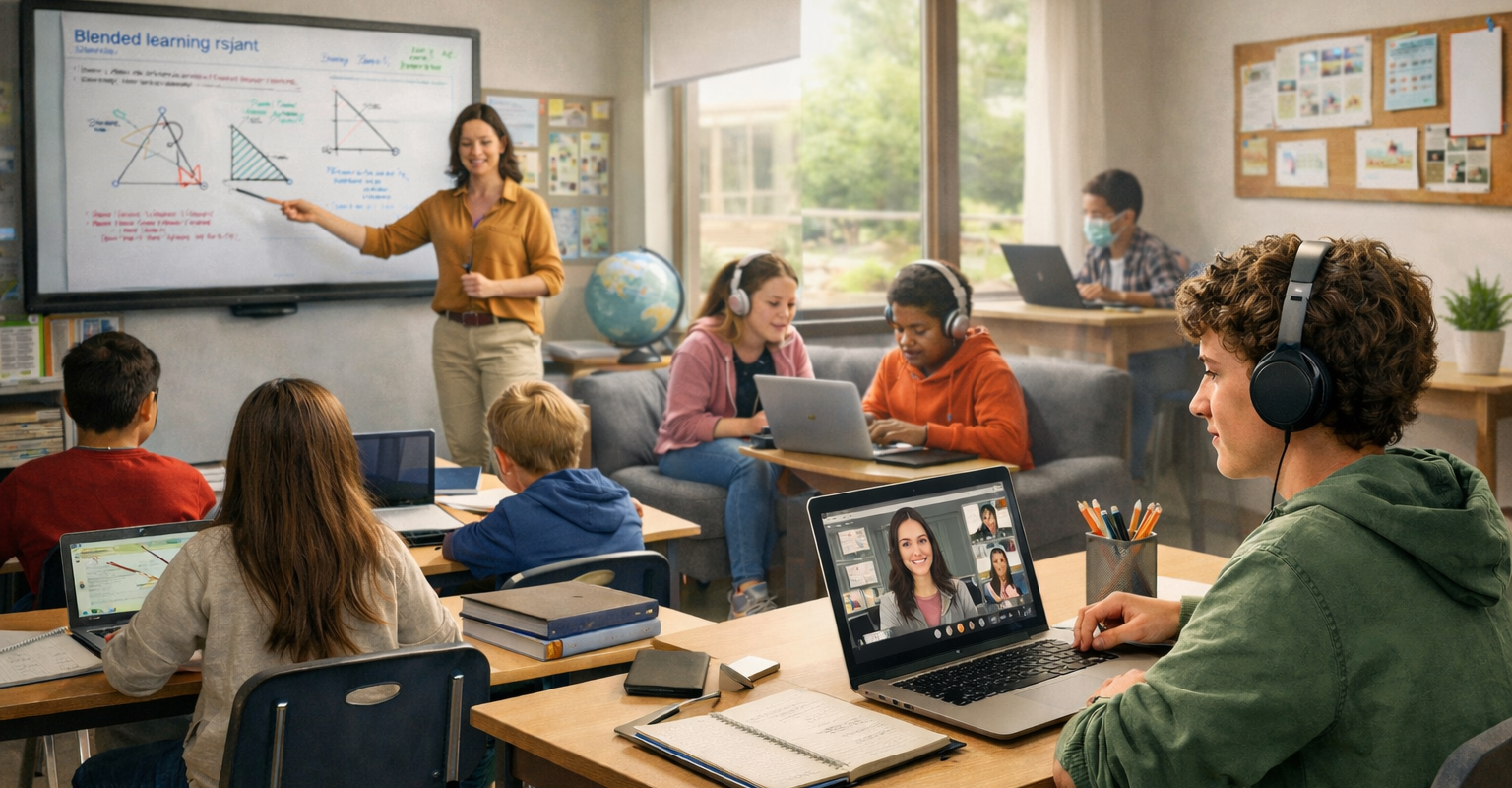
🌐 What Are Blended Learning & Hybrid Study Models in Schools?
Blended learning & hybrid study models in schools combine:
Face-to-face classroom teaching
Online learning tools, platforms, and resources
🔹 Blended Learning
Students attend regular classes but also use digital content such as videos, quizzes, virtual labs, and learning apps to strengthen understanding.
🔹 Hybrid Study Model
Some students attend classes physically, while others join online at the same time. Learning continues seamlessly across both modes.
Both systems aim to improve learning outcomes while making education more adaptable.
Why Blended Learning & Hybrid Study Models in Schools Matter Today
The traditional “one-size-fits-all” classroom no longer works for modern learners. Blended learning & hybrid study models in schools address several critical challenges:
Different learning speeds among students
Need for digital skills from an early age
Accessibility issues for remote or special-needs learners
Overloaded curriculum and exam pressure
By integrating technology with classroom teaching, schools can deliver personalized and engaging education.
📚 Key Features of Blended Learning & Hybrid Study Models in Schools
1️⃣ Personalized Learning Paths
Digital tools adapt lessons based on student performance. Faster learners move ahead, while others get extra support.
2️⃣ Anytime, Anywhere Learning
Recorded lectures, PDFs, and interactive modules allow students to revise at home, reducing dependency on rote memorization.
3️⃣ Technology-Enabled Classrooms
Smart boards, learning management systems (LMS), and AI-based assessments enhance teaching quality.
4️⃣ Student-Centered Approach
Teachers become mentors rather than lecturers, encouraging curiosity and critical thinking.
5️⃣ Continuous Assessment
Online quizzes and analytics provide real-time feedback, helping students identify weak areas early.
⚖️ Positive Impacts of Blended Learning & Hybrid Study Models in Schools
✅ Improves Learning Outcomes
One of the strongest advantages of blended learning & hybrid study models in schools is their ability to significantly improve learning outcomes. Traditional classrooms often rely on one-time explanations, which may not suit every learner. In contrast, blended learning allows students to revisit recorded lectures, animated videos, simulations, and interactive quizzes multiple times.
This repeated exposure helps students:
Understand complex concepts at their own pace
Strengthen memory retention through visual and auditory learning
Clarify doubts without fear of judgment
As a result, blended learning & hybrid study models in schools move students away from rote memorization and toward conceptual clarity, which is essential for exams as well as real-life application.
✅ Encourages Self-Learning
A major educational shift enabled by blended learning & hybrid study models in schools is the development of self-learning habits. Instead of depending entirely on teachers, students learn how to explore topics independently using digital resources such as e-books, learning apps, and online practice modules.
This independence helps students:
Take responsibility for their own progress
Develop curiosity and problem-solving skills
Build discipline and time-management abilities
Over time, students trained under blended learning & hybrid study models in schools become confident learners who can adapt to higher education, competitive exams, and lifelong learning environments.
✅ Reduces Academic Pressure
Academic pressure and exam anxiety are common challenges in school education. Blended learning & hybrid study models in schools help reduce this pressure by distributing learning across multiple formats rather than relying solely on high-stakes exams.
Key stress-reducing aspects include:
Continuous assessments instead of one final test
Flexible revision schedules using digital content
Better preparation through frequent practice and feedback
Because learning happens gradually and interactively, students feel more prepared and less overwhelmed. Thus, blended learning & hybrid study models in schools promote healthier academic environments and improved mental well-being.
✅ Supports Inclusive Education
Inclusivity is one of the most powerful benefits of blended learning & hybrid study models in schools. Students who face physical, geographical, or health-related challenges often struggle in traditional classroom settings. Hybrid learning bridges this gap.
It benefits:
Students with disabilities through assistive technologies
Children in remote or rural areas via online access
Students with medical conditions who cannot attend school regularly
By offering flexible participation options, blended learning & hybrid study models in schools ensure that education reaches every learner, supporting equity and equal opportunity.
✅ Enhances Teacher Effectiveness
Contrary to the belief that technology replaces teachers, blended learning & hybrid study models in schools actually enhance teacher effectiveness. Digital tools automate repetitive tasks such as grading objective tests, attendance tracking, and content distribution.
This allows teachers to:
Spend more time mentoring and guiding students
Focus on individual learning needs
Use data analytics to identify weak areas in the class
As facilitators of learning rather than mere content deliverers, teachers become more impactful. Hence, blended learning & hybrid study models in schools create a win-win situation for both educators and students.
⚠️ Challenges of Blended Learning & Hybrid Study Models in Schools
Despite many advantages, blended learning & hybrid study models in schools face certain challenges:
❌ Digital Divide
Not all students have access to devices or stable internet, especially in rural areas.
❌ Teacher Training Gaps
Teachers need proper training to use digital tools effectively.
❌ Screen Time Concerns
Excessive screen use may affect health if not balanced properly.
❌ Infrastructure Costs
Schools must invest in devices, software, and cybersecurity.
However, with government support and smart planning, these challenges can be addressed.
🏫 Role of Schools in Implementing Blended Learning Successfully
For blended learning & hybrid study models in schools to succeed, institutions must:
Upgrade digital infrastructure
Train teachers in ed-tech tools
Ensure data privacy and cyber safety
Maintain balance between online and offline learning
Engage parents and students in the transition
Schools that adopt a phased and inclusive approach see better results.
🎓 Impact on Students’ Future Skills
Blended learning & hybrid study models in schools prepare students for the future by developing:
Digital literacy
Critical thinking
Time management
Collaboration skills
Problem-solving ability
These skills align closely with future careers and competitive exams.
🇮🇳 Blended Learning & Hybrid Study Models in Schools: Indian Context
India’s education reforms under NEP 2020 strongly support blended education. Initiatives like:
DIKSHA platform
Virtual labs
Smart classrooms
Hybrid exams and assessments
are promoting blended learning & hybrid study models in schools across states.
Future of Blended Learning & Hybrid Study Models in Schools
The future of school education lies in flexible, technology-enabled classrooms. Experts predict:
Greater use of AI-based learning
Virtual reality classrooms
Personalized digital textbooks
Hybrid assessments and project-based learning
Blended learning & hybrid study models in schools will soon become the standard rather than the exception.
📌 Key Takeaways
Blended learning & hybrid study models in schools combine digital and classroom teaching
They promote personalized, inclusive, and skill-based education
Challenges exist but are manageable with planning
They align strongly with future career and exam needs
Blended learning & hybrid study models in schools are not just an educational experiment—they are a powerful transformation of how students learn. By merging human interaction with technology, these models create a balanced, future-ready learning environment.
For students, teachers, and parents, embracing blended learning means embracing smarter, more meaningful education.
❓ FAQs on Blended Learning & Hybrid Study Models in Schools
1. Blended Learning & Hybrid Study Models in Schools – what do they mean?
Blended learning & hybrid study models in schools combine traditional classroom teaching with digital learning tools such as online videos, virtual classrooms, learning apps, and assessments. Students learn partly in physical classrooms and partly through technology-enabled platforms, creating a flexible and interactive learning experience.
2. Blended Learning & Hybrid Study Models in Schools – how do they benefit students?
Blended learning & hybrid study models in schools help students learn at their own pace, revise topics multiple times, and access resources beyond textbooks. This approach improves understanding, reduces exam stress, and builds independent learning skills that are essential for higher education and competitive exams.
3. Blended Learning & Hybrid Study Models in Schools – are they suitable for all age groups?
Yes, blended learning & hybrid study models in schools are adaptable for all age groups. For younger students, they use interactive videos and games, while senior students benefit from online tests, recorded lectures, and self-paced study modules. Proper guidance ensures age-appropriate usage.
4. Blended Learning & Hybrid Study Models in Schools – do they replace teachers?
No, blended learning & hybrid study models in schools do not replace teachers. Instead, they enhance the teacher’s role by reducing routine tasks and allowing educators to focus on mentoring, doubt-solving, and personalized guidance. Teachers remain central to the learning process.
5. Blended Learning & Hybrid Study Models in Schools – how do they support inclusive education?
Blended learning & hybrid study models in schools support inclusive education by helping students with disabilities, health issues, or those in remote areas continue learning through digital access. Features like recorded lessons and assistive technologies ensure no student is left behind.
6. Blended Learning & Hybrid Study Models in Schools – what challenges do they face?
While beneficial, blended learning & hybrid study models in schools face challenges such as digital infrastructure gaps, internet accessibility, and the need for teacher training. However, with proper planning and government support, these challenges can be effectively addressed.
7. Blended Learning & Hybrid Study Models in Schools – are they the future of education in India?
Yes, blended learning & hybrid study models in schools are widely seen as the future of education in India. They align with the National Education Policy (NEP) goals of digital empowerment, skill development, and student-centered learning.

One stop solution 🇮🇳