Project-Based and Experiential Learning Builds Skills that traditional classroom teaching alone cannot always achieve. In today’s rapidly changing world, students need more than memorization—they need practical skills, real-world exposure, and the confidence to apply knowledge in meaningful ways.
Modern education systems across the globe are increasingly adopting this approach because Project-Based and Experiential Learning Builds Skills essential for academic success, career readiness, and lifelong learning.
📘 What Is Project-Based and Experiential Learning?
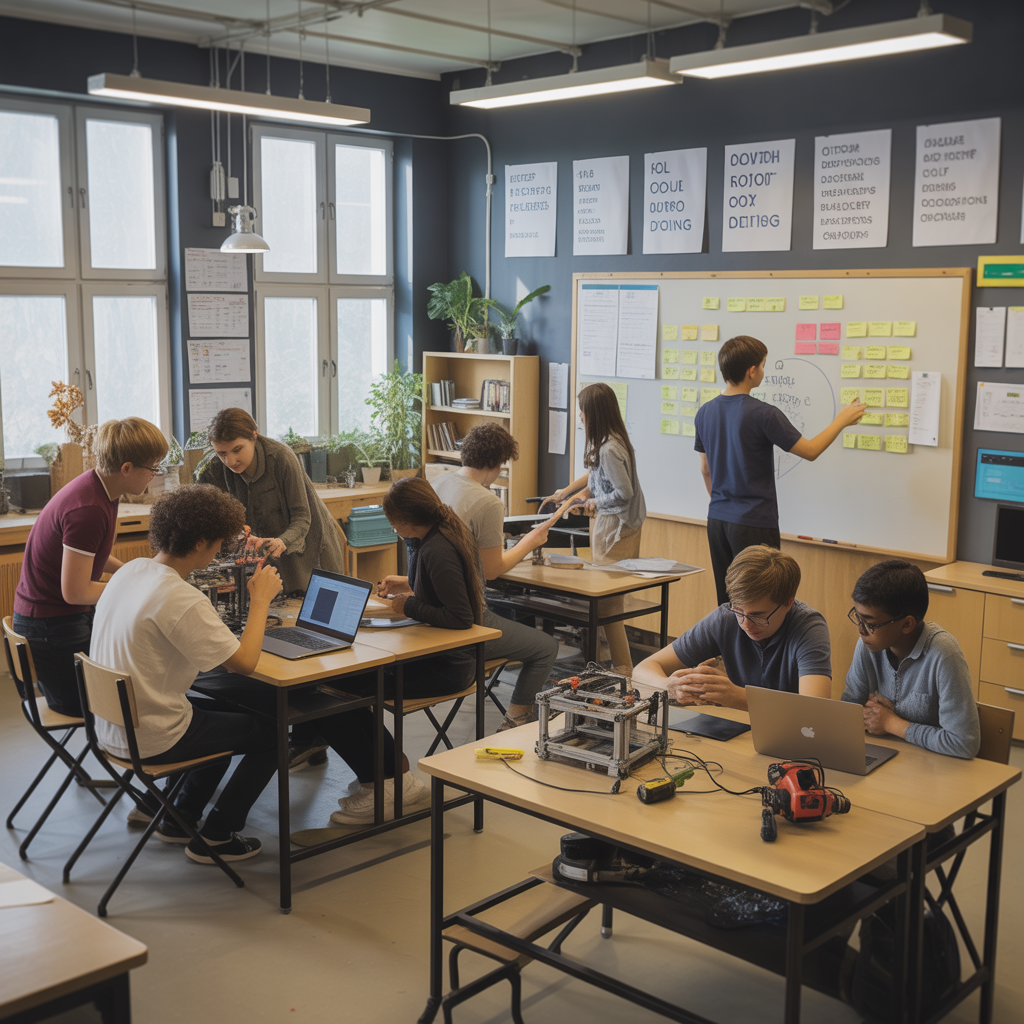
Project-Based and Experiential Learning Builds Skills by engaging students in real-life projects, activities, and experiences rather than passive listening. Students learn by doing, exploring, and reflecting.
Project-Based and Experiential Learning Builds Skills This approach includes:
Hands-on projects
Real-world problem solving
Group activities and collaboration
Experiments, case studies, and simulations
Community-based learning
Through these methods, Project-Based and Experiential Learning Builds Skills that are practical, transferable, and future-ready.
🎓 Why Project-Based and Experiential Learning Builds Skills Better Than Traditional Methods
Traditional learning often focuses on textbooks and exams. However, Project-Based and Experiential Learning Builds Skills by encouraging active participation and deep understanding.
Key Differences:
| Traditional Learning | Project-Based Learning |
|---|---|
| Memorization | Application |
| Teacher-centered | Student-centered |
| Theory-focused | Practice-focused |
| Exam-oriented | Skill-oriented |
This shift ensures students are prepared not just for exams, but for real life. Project-Based and Experiential Learning Builds Skills
🧠 How Project-Based and Experiential Learning Builds Skills in Students
🔍 1. Develops Critical Thinking
Project-Based and Experiential Learning Builds Skills by challenging students to analyze problems, research solutions, and make informed decisions. This strengthens reasoning and logical thinking.
🤝 2. Enhances Collaboration and Teamwork
When students work in groups, Project-Based and Experiential Learning Builds Skills such as communication, leadership, and conflict resolution—skills highly valued in careers.
🎨 3. Boosts Creativity and Innovation
Creative problem-solving is encouraged because Project-Based and Experiential Learning Builds Skills that allow students to think beyond textbooks and explore innovative ideas.
🗣️ 4. Improves Communication Skills
Presentations, discussions, and project reports ensure Project-Based and Experiential Learning Builds Skills in speaking, writing, and articulation.
🛠️ 5. Builds Practical and Technical Skills
Whether it’s a science experiment, coding project, or social study survey, Project-Based and Experiential Learning Builds Skills students can apply in real-world situations.
🌍 Project-Based and Experiential Learning Builds Skills for Future Careers
Project-Based and Experiential Learning Builds Skills Employers today seek individuals who can:
Solve problems
Work in teams
Adapt to change
Communicate effectively
Project-Based and Experiential Learning Builds Skills that directly align with industry expectations and 21st-century careers.
Students exposed to this learning style gain confidence and workplace readiness early in life.
🏫 Role of Schools and Teachers
Schools play a key role because Project-Based and Experiential Learning Builds Skills only when implemented effectively.
Teachers can:
Design meaningful projects
Encourage inquiry-based learning
Guide reflection and evaluation
Connect learning to real-life contexts
When educators shift from instructors to facilitators, learning becomes more impactful. Project-Based and Experiential Learning Builds Skills
📚 Project-Based and Experiential Learning Builds Skills Across Subjects
Project-Based and Experiential Learning Builds Skills This approach works across all disciplines:
Science: Experiments, model building
Mathematics: Real-life problem solving
Social Studies: Community projects, surveys
Language: Storytelling, debates, presentations
Technology: Coding, app development
Across subjects, Project-Based and Experiential Learning Builds Skills holistically.
🌱 Benefits for Student Motivation and Engagement
Students often lose interest in rote learning. However, Project-Based and Experiential Learning Builds Skills by making learning enjoyable and meaningful.
Key Benefits:
Increased curiosity
Higher engagement
Better retention of knowledge
Positive learning attitude
Project-Based and Experiential Learning Builds Skills Motivated students become lifelong learners.
📈 Academic Performance and Learning Outcomes
Research shows that Project-Based and Experiential Learning Builds Skills while also improving academic performance. Students understand concepts deeply, which leads to better exam results and conceptual clarity.
📱 Technology and Experiential Learning
Digital tools further enhance learning because Project-Based and Experiential Learning Builds Skills through:
Virtual labs
Online simulations
Educational apps
Collaborative platforms
Technology bridges classroom learning with global experiences. Project-Based and Experiential Learning Builds Skills
🧩 Project-Based and Experiential Learning Builds Skills for Competitive Exams
Project-Based and Experiential Learning Builds Skills Competitive exams now emphasize:
Application-based questions
Case studies
Analytical thinking
Students exposed to this learning style perform better because Project-Based and Experiential Learning Builds Skills needed to tackle complex problems.
🌐 Global Education Trends
Globally, education policies highlight that Project-Based and Experiential Learning Builds Skills essential for innovation-driven economies. Many national education frameworks encourage experiential learning to prepare students for future challenges.
✨ Conclusion
Project-Based and Experiential Learning Builds Skills that empower students to succeed academically, professionally, and personally. By connecting learning with real-world experiences, this approach transforms classrooms into dynamic spaces of creativity and growth.
For students, embracing this learning model means gaining confidence, competence, and clarity. For educators and institutions, it means shaping future-ready individuals equipped to thrive in an ever-changing world.
1. What is project-based and experiential learning?
Project-based and experiential learning is an educational approach where students learn through hands-on projects, real-life experiences, and practical activities. This method emphasizes learning by doing, ensuring that Project-Based and Experiential Learning Builds Skills such as critical thinking, creativity, and collaboration.
2. How does project-based and experiential learning build skills in students?
Project-Based and Experiential Learning Builds Skills by allowing students to apply theoretical knowledge to real-world problems. It strengthens problem-solving abilities, communication skills, teamwork, and decision-making through active participation.
3. Why is project-based and experiential learning important for modern education?
In today’s competitive and dynamic world, rote learning is not enough. Project-Based and Experiential Learning Builds Skills that prepare students for future careers by improving adaptability, innovation, and practical understanding, which are essential for success.
4. Which skills are developed through project-based and experiential learning?
Project-Based and Experiential Learning Builds Skills This learning approach develops:
Critical thinking
Creativity and innovation
Collaboration and leadership
Communication skills
Practical and technical skills
Overall, Project-Based and Experiential Learning Builds Skills that are essential for academic growth and professional readiness.
5. Is project-based and experiential learning useful for competitive exams?
Yes. Project-Based and Experiential Learning Builds Skills such as analytical thinking and application-based understanding, which are increasingly tested in competitive exams and entrance assessments.
6. How can schools implement project-based and experiential learning effectively?
Schools can implement this approach by integrating real-world projects, encouraging teamwork, using technology-based tools, and focusing on reflection-based assessment. When done properly, Project-Based and Experiential Learning Builds Skills that benefit students academically and personally.

One Response