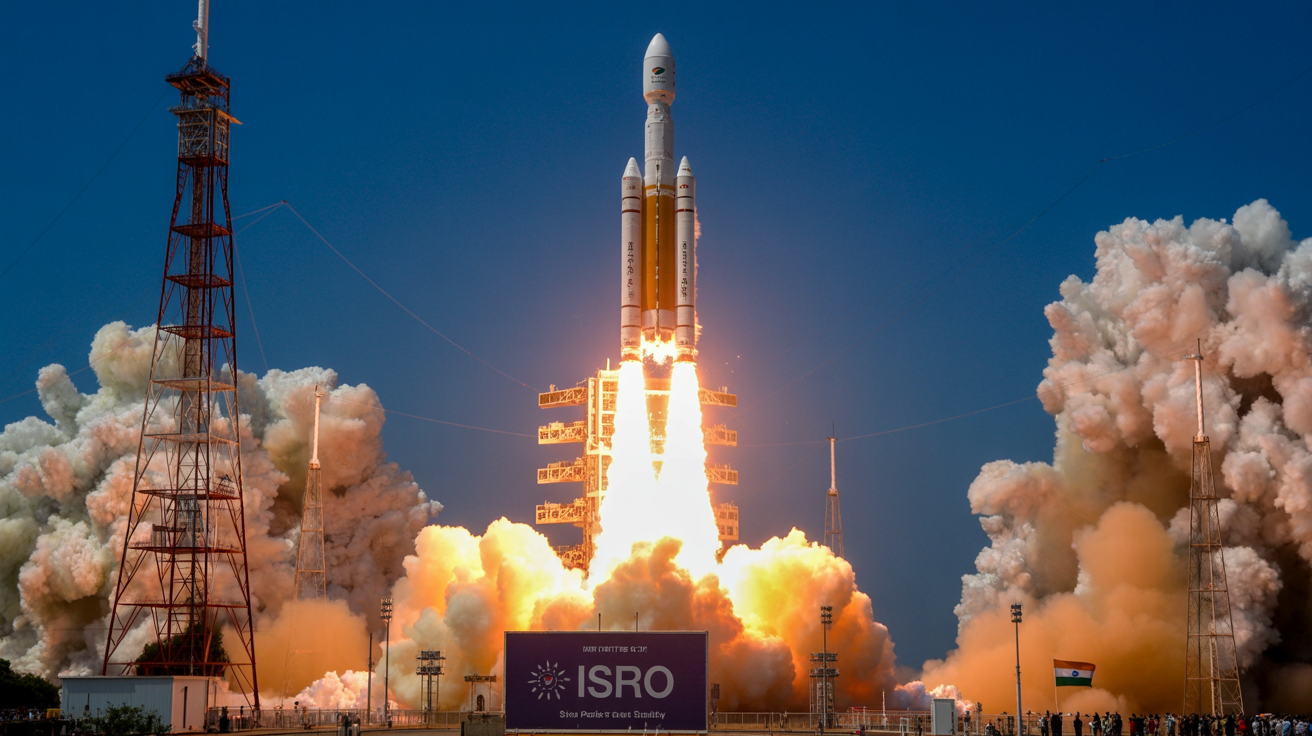
In a historic achievement, the Indian Space Research Organisation successfully launches India’s heaviest communication satellite, marking a milestone in the nation’s technological and digital evolution. This landmark mission symbolizes not just scientific excellence but also India’s determination to build a stronger, connected, and digitally empowered future.
The satellite, designed for high-bandwidth communication, aims to bridge connectivity gaps across rural, remote, and strategic regions of India, reaffirming ISRO’s commitment to inclusive development and technological innovation.
Mission Overview: A Step Toward a Connected India
The Indian Space Research Organisation successfully launches India’s heaviest communication satellite using its advanced launch vehicle technology. The satellite, weighing over 6,400 kg, is designed to enhance broadband services, digital television transmission, tele-education, and disaster management communication across the nation.
This mission represents ISRO’s continuous efforts to upgrade communication infrastructure while fostering global partnerships in satellite communication and research.
Key Objectives of the Satellite Mission
Strengthening Digital Connectivity:
The satellite enhances high-speed internet coverage, connecting rural schools, hospitals, and government offices.Empowering Education and Healthcare:
Through e-learning platforms and telemedicine, it brings knowledge and healthcare access to remote areas.National Security and Disaster Management:
Ensures uninterrupted communication channels for defense and emergency response systems.Boosting 5G Infrastructure:
Lays a strong foundation for India’s 5G rollout, supporting faster data transmission and smart infrastructure.Global Collaboration:
Reinforces India’s presence in international satellite networks and joint research initiatives.
How It Strengthens National Connectivity
When the Indian Space Research Organisation successfully launches India’s heaviest communication satellite, it directly contributes to India’s “Digital Bharat” vision.
Rural Inclusion: Villages with limited digital access will benefit from enhanced connectivity for e-governance and online services.
Economic Growth: Expanding communication infrastructure supports e-commerce, startups, and financial inclusion.
Educational Transformation: Students from remote areas gain access to real-time online classes and global learning resources.
Healthcare Access: Telemedicine initiatives will now reach deeper into rural healthcare systems, saving lives and improving health outcomes.
💡 Technological Advancements Behind the Mission
The mission showcases ISRO’s ability to integrate cutting-edge propulsion systems, heat-resistant materials, and AI-based monitoring systems. The use of indigenous cryogenic engines exemplifies India’s growing self-reliance in space technology.
Key innovations include:
Dual-frequency transponders for high-speed data transfer.
Advanced onboard processors for real-time communication management.
AI-assisted monitoring for autonomous navigation and correction.
When the Indian Space Research Organisation successfully launches India’s heaviest communication satellite, it reflects decades of cumulative R&D in satellite engineering and launch technology.
Educational Value: Inspiring India’s Young Innovators
This mission serves as a powerful inspiration for students aspiring to join STEM fields. Schools and universities across India are discussing the Indian Space Research Organisation successfully launches India’s heaviest communication satellite mission as a learning model for innovation, teamwork, and perseverance.
The mission aligns with the National Education Policy (NEP) 2020, which emphasizes experiential learning and research-based education in science and technology.
🌏 Global Impact: India as a Space Powerhouse
The success of the Indian Space Research Organisation successfully launches India’s heaviest communication satellite enhances India’s position in the global space economy.
Boosts Global Credibility: ISRO joins the elite league of space agencies capable of launching ultra-heavy satellites.
Encourages International Partnerships: Paves the way for joint missions with NASA, ESA, and JAXA.
Promotes Space Diplomacy: India’s advancements foster collaborations in technology sharing and peaceful space exploration.
Positive Impacts
Boosts National Connectivity: Expands digital reach to the remotest corners of India.
Encourages Innovation: Strengthens India’s capacity for indigenous satellite manufacturing.
Enhances Data Security: Provides secure national communication networks.
Supports Economic Growth: Expands opportunities in IT, telecommunications, and digital entrepreneurship.
Inspires Youth: Motivates students to pursue careers in space science, engineering, and AI research.
⚠️ Potential Challenges
High Development Costs: Advanced communication satellites require significant investment.
Space Debris Risks: Launching more satellites increases orbital congestion.
Maintenance Complexity: Managing heavy satellites in geostationary orbit involves long-term monitoring.
Cybersecurity Threats: Satellite communication systems need strong encryption.
Global Competition: Other nations’ rapid advancements may challenge India’s space leadership.
Despite these challenges, the Indian Space Research Organisation successfully launches India’s heaviest communication satellite as a symbol of technological resilience and strategic vision.
Economic and Strategic Significance
This launch contributes to multiple national goals, including:
Atmanirbhar Bharat: Promoting self-reliance in space manufacturing.
Digital India Mission: Expanding internet accessibility across all regions.
Smart Cities Mission: Facilitating IoT and AI-based urban development.
Defense Readiness: Ensuring secure and seamless communication for national security agencies.
Each of these objectives highlights how the Indian Space Research Organisation successfully launches India’s heaviest communication satellite in alignment with India’s long-term economic and digital transformation strategy.
FAQs on Indian Space Research Organisation Successfully Launches India’s Heaviest Communication Satellite
Q1. What is the purpose of India’s heaviest communication satellite?
A: Its purpose is to improve broadband connectivity, tele-education, defense communication, and digital infrastructure nationwide.
Q2. How heavy is the new ISRO satellite?
A: The satellite weighs over 6,400 kg, making it the heaviest communication satellite ever launched by ISRO.
Q3. How does it benefit rural India?
A: It bridges the digital divide by providing high-speed internet access to remote and underserved areas.
Q4. Why is this mission important for students?
A: It serves as a real-world example of innovation, teamwork, and scientific achievement — key values for STEM learners.
Q5. How does this launch support India’s 5G network?
A: The satellite offers enhanced bandwidth and data reliability, strengthening 5G rollout nationwide.
The Indian Space Research Organisation successfully launches India’s heaviest communication satellite, reaffirming India’s status as a global space power. Beyond scientific triumph, this mission stands for national unity, inclusivity, and innovation — connecting every Indian to the digital revolution.
From classrooms to corporate networks, the impact will be felt across every sector, fostering a future-ready India. As ISRO continues to break barriers, this mission represents not just a technological success but a visionary step toward a truly connected nation.

One Response