The Uttarakhand Minority Education Bill 2025 — Integration of Madrasas into Mainstream Education System marks a historic step toward creating a unified and inclusive education model in India. This new initiative seeks to modernize madrasa education, ensuring that minority students receive access to mainstream subjects such as science, mathematics, English, and digital literacy.
By introducing standardized curricula under the Uttarakhand Board of School Education, this bill aims to bridge the gap between traditional religious studies and contemporary skill-based education — empowering thousands of students for future-ready learning.
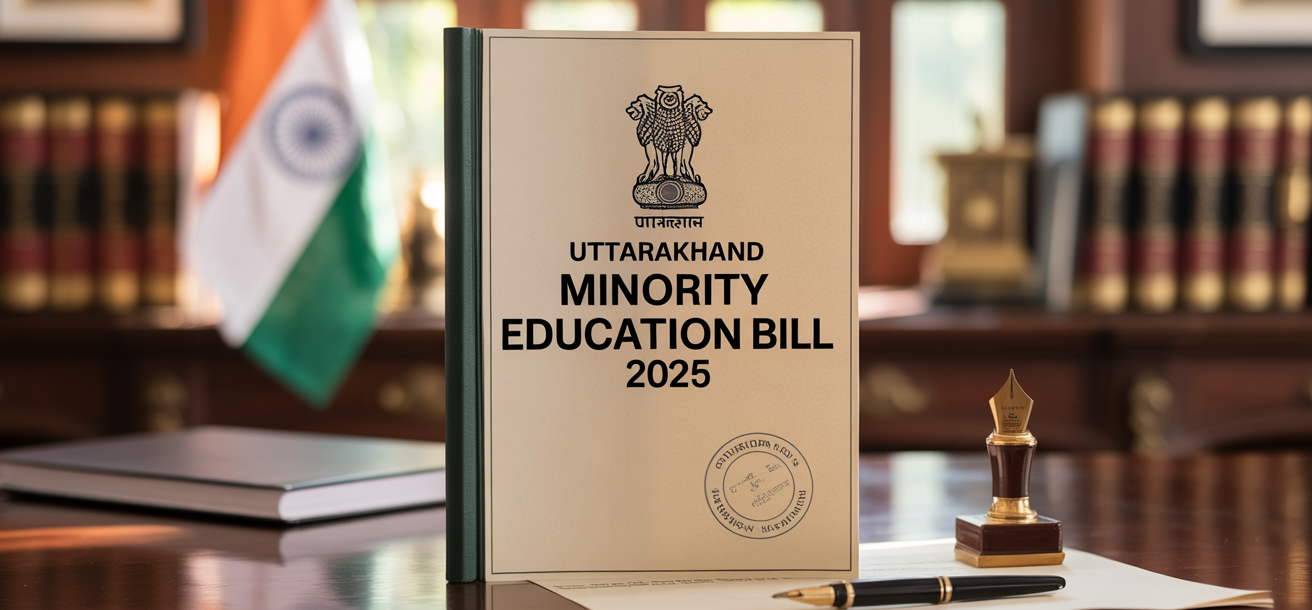
Why the Uttarakhand Minority Education Bill 2025 Matters
The Uttarakhand Minority Education Bill 2025 — Integration of Madrasas into Mainstream Education System represents a national shift toward inclusive development. The policy ensures that no student is left behind due to educational segregation.
Key objectives include:
Bringing madrasa institutions under regulatory supervision.
Providing quality education aligned with NEP 2020 goals.
Equipping minority students with employable and digital skills.
Promoting unity through cultural and social integration.
This aligns with the broader goal of “Viksit Bharat by 2047”, where every learner has access to modern education.
Key Features of Uttarakhand Minority Education Bill 2025
Unified Curriculum:
All madrasas will follow the Uttarakhand Board syllabus, integrating modern subjects alongside religious studies.Teacher Training:
Educators will undergo specialized training in bilingual and interdisciplinary teaching to balance traditional and contemporary education.Digital Education Push:
Government will install smart classrooms, digital libraries, and e-learning tools in madrasas.Student Scholarships:
Minority students will receive merit-based scholarships to continue higher education.Infrastructure Modernization:
Madrasas will be upgraded with laboratories, libraries, and digital connectivity.Quality Monitoring:
The state board will evaluate madrasa performance annually to maintain educational standards.Skill and Vocational Training:
Students will gain exposure to skill-based courses to enhance employability.
Positive and Negative Impacts
✅ Positive Impacts
Educational Equality: All students get access to modern subjects and recognized certification.
Employment Opportunities: Graduates become eligible for competitive exams and private jobs.
Cultural Harmony: Encourages inter-community understanding through shared education spaces.
Empowerment of Minorities: Enhances participation in socio-economic development.
Quality Enhancement: Standardization ensures better outcomes and accountability.
⚠️ Challenges & Concerns
Resistance from Traditionalists: Some institutions may oppose curriculum change.
Implementation Barriers: Infrastructure gaps in rural areas could slow the process.
Teacher Readiness: Need for continuous training and cultural sensitivity.
Funding Concerns: Sustained financial support is crucial for long-term success.
Despite these challenges, the initiative stands as a progressive reform that balances faith-based learning with modern education principles.
Alignment with NEP 2020
The Uttarakhand Minority Education Bill 2025 — Integration of Madrasas into Mainstream Education System aligns with NEP 2020 goals of inclusivity, equity, and quality.
Key parallels include:
Focus on foundational literacy and numeracy.
Introduction of vocational education at the school level.
Teacher training under national frameworks.
Integration of technology through smart education initiatives.
This alignment ensures that madrasa students are part of India’s global education roadmap.
Student Perspective: Opportunities Ahead
For students, the bill offers:
Recognition in state and central universities.
Equal access to scholarships and government programs.
Participation in science fairs, olympiads, and national skill missions.
Empowerment through digital and language literacy.
Essentially, the Uttarakhand Minority Education Bill 2025 — Integration of Madrasas into Mainstream Education System gives students wings to dream beyond traditional boundaries.
FAQs on Uttarakhand Minority Education Bill 2025 — Integration of Madrasas into Mainstream Education System
Q1. What is the aim of the Uttarakhand Minority Education Bill 2025?
It aims to modernize madrasa education by merging it with mainstream curricula under the state board.
Q2. Will religious studies be removed?
No, religious education will continue, but modern subjects like science, math, and English will be added.
Q3. How does this benefit madrasa students?
It provides recognized certificates, better job prospects, and access to higher education.
Q4. Does it align with NEP 2020?
Yes, it reflects NEP 2020’s goals of inclusive, skill-based, and digitally enhanced learning.
Q5. What are the main challenges in implementation?
Infrastructure upgrades, teacher training, and addressing community concerns are the key hurdles.
Q6. How will the government monitor progress?
Through digital dashboards and annual state education audits.
The Uttarakhand Minority Education Bill 2025 — Integration of Madrasas into Mainstream Education System is a transformative move toward inclusive and equitable education in India. By merging traditional and modern pedagogy, it empowers students with both moral grounding and practical skills needed for the 21st century.
This initiative not only enriches India’s educational diversity but also contributes to building a Viksit Bharat — where every student, irrespective of background, has the opportunity to learn, grow, and thrive.

One Response